Hepatic Ectopic Pregnancy: Multimodality Imaging of a Rare Cause of Hemoperitoneum
2Faculty of Medicine, Tel Aviv University, Israel
3Department of Obstetrics and Gynecology, Wolfson Medical Center, Israel
BACKGROUND
Hepatic ectopic pregnancy is a rare and potentially fatal event. An extra-pelvic gestation may be missed when pelvic ultrasound suggests a tubal ectopic pregnancy.
CASE PRESENTATION
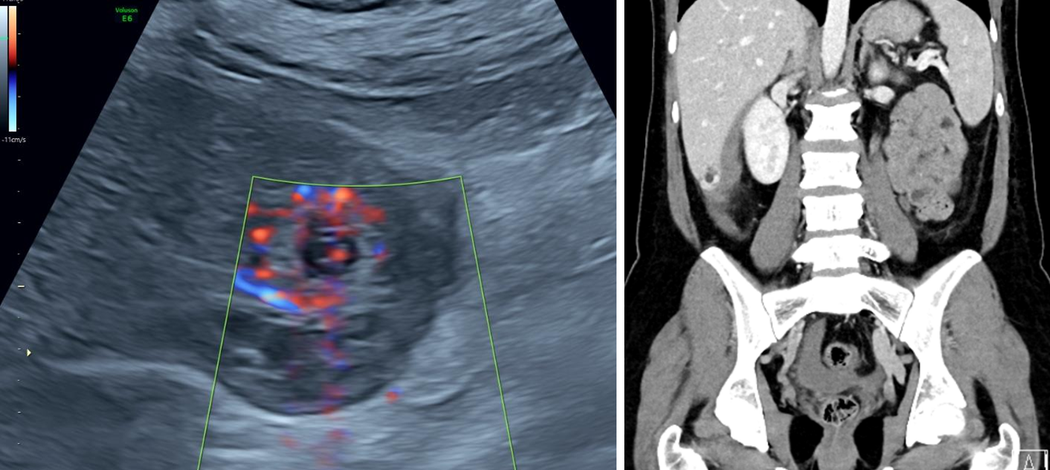
A 40-year-old gravida 2 para 2 (G2P2) woman with two previous cesarean deliveries presented with pain and spotting. Beta-human chorionic gonadotropin (β-hCG) was markedly elevated. Ultrasound showed hemoperitoneum and a suspicious right adnexal abnormality. Laparoscopy found 1,800 mL hemoperitoneum and a thickened right ampullary tube without rupture. Salpingectomy was performed, but pathology showed no chorionic villi. Persistent β-hCG led to repeat ultrasound, revealing a 20×19 mm gestational sac-like lesion in the liver containing an embryo with cardiac activity (crown-rump length [CRL] 6 weeks), with adjacent organized hematoma. Computed tomography (CT) localized the lesion to hepatic segment VI and showed blood in Morrison’s pouch without active extravasation. Laparoscopic en bloc partial hepatectomy followed. Liver pathology confirmed chorionic villi, hemorrhage, and trophoblasts within hepatic parenchyma.
DISCUSSION
A 2024 systematic review identified 47 hepatic pregnancies. Abdominal ectopic pregnancies have also been reported in the peritoneum, omentum, uterine surface, spleen, bowel and mesentery, diaphragm, and near large vessels. In a 17-patient abdominal pregnancy series, only 29.4% were diagnosed before surgery.
CONCLUSION
Hepatic ectopic pregnancy should be considered when hemoperitoneum and persistent β-hCG remain unexplained after pelvic evaluation. Systematic ultrasound followed by contrast-enhanced CT can establish the diagnosis and guide multidisciplinary surgery.