Brain-targeted lipid nanoparticles for neuronal gene therapy
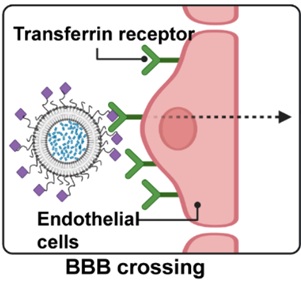
Nanotechnology offers numerous potential benefits for treating disease, including the ability to carry complex molecular cargoes, such as RNA and proteins, and target specific tissues, including the brain. Using AI, we designed brain-targeted nanoparticles that enhance the delivery of drugs (monoclonal antibodies, mAbs, and genes) across the blood-brain-barrier (BBB) and into neurons, for treating Parkinson’s disease. 100-nm brain-targeted liposomes (BTL) cross human BBB models and are taken up by primary neurons. Within neurons, SynO4 is released from the nanoparticles and binds to its target, alpha-synuclein (AS), thereby reducing AS aggregation and enhancing neuronal viability. In vivo, intravenous administration results in a seven-fold increase in mAbs in brain cells, which decreases AS aggregation and neuroinflammation, and improves behavioral motor function and learning ability in mice. Targeted nanotechnologies offer a valuable platform for drug delivery to treat brain neurodegeneration.
The evolution of drug delivery systems into synthetic cells, programmed nanoparticles with autonomous synthetic-bio capabilities to synthesize diagnostic and therapeutic proteins within the body, and their promise for treating diseases, will be discussed.
References:
1. Brain‐Targeted Liposomes Loaded with Monoclonal Antibodies Reduce Alpha‐Synuclein Aggregation and Improve Behavioral Symptoms in Parkinson`s Disease, Advanced Materials, 2023, 2304654
2. AI-validated brain-targeted mRNA lipid nanoparticles with neuronal tropism, Sela et al., ACS Nano, 2025, 19 (41), 36106-36128
3. Synthetic cells with self-activating optogenetic proteins communicate with natural cells, Adir et al. Nature Communications, 2022, 13, 2328